
Slide 1: To begin our journey, we can trace the biological response that created the whole synthase that occurs in the trichome head, and more specifically the cannabinoids, to a time when “PSM (plant secondary metabolites) likely evolved in an environment where biotic stressors played a lesser role in driving evolutive adaptation (Tossi et al., 2019). By looking at other PSM functions and their role in the plant's response to abiotic stress, one theory states that to survive in shallow water, ancestral algae evolved mechanisms to survive in an environment with elevated UV radiation (<380 nm), a primordial abiotic stressor (Akula and Ravishankar, 2011; Jenkins, 2017). UV radiation leads to damaged DNA and photosystems, resulting in reduced production (Teramura, 1983). Plants evolved mechanisms to protect against this radiation stress by accumulating phenolic and terpenoid compounds that absorb UV radiation and acted as sunscreen in leaves (Rozema et al., 2002). This allowed photosynthetic organisms to grow in new ecological niches, while exposing themselves to increasing UV radiation (Tossi et al., 2019). This theory is supported by the apparition of a highly conserved receptor, UV-B Resistance 8 (UVR8) in terrestrial plants that mediates plant photomorphogenesis in response to UV radiation (Jenkins, 2017; Tossi et al., 2019).”
From Cannabinoids and Terpenes: How Production of Photo-Protectants Can Be Manipulated to Enhance Cannabis sativa L. Phytochemistry, Front Plant Science, 2021 May 31 doi: 10.3389/fpls.2021.620021 www.ncbi.nlm.nih.gov/pmc/articles/PMC8200639/
Cannabinoids are phytoprotectants, the original sunscreen!
Phenolic and terpenoid compounds are the foundation elements of cannabinoids.
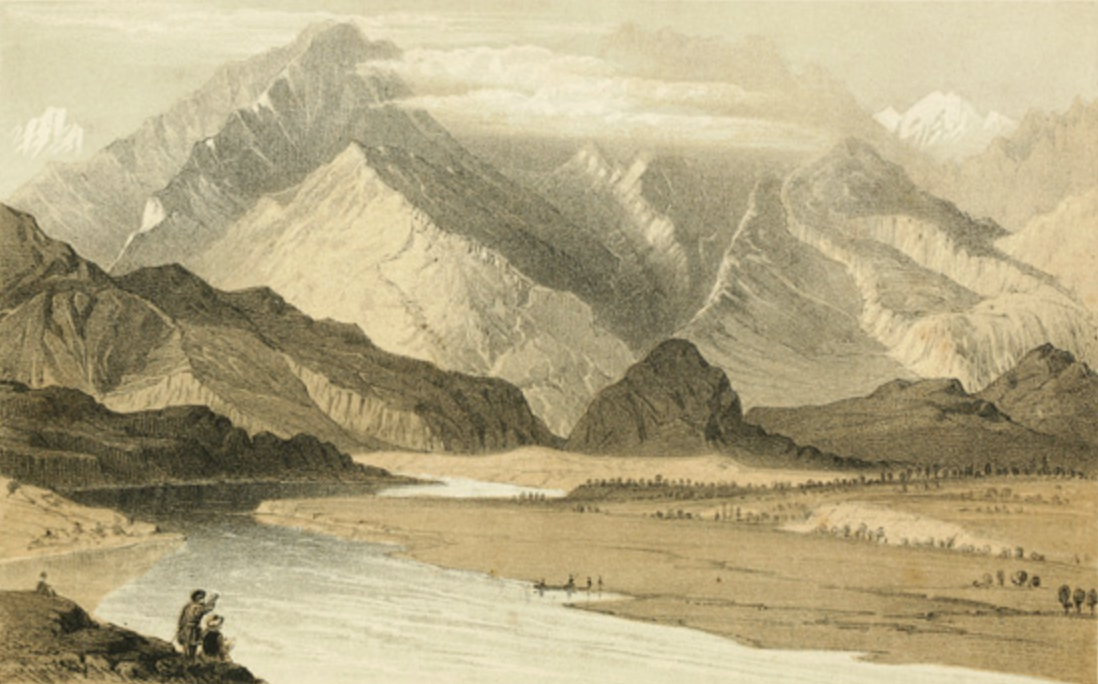
Slide 1 Image: Painting shows Iskardo, from the south illustration by J. W. del. W. L. Walton, Lithog. Printed by Hullmandel & Walton in the book Western Himilaya and Tibet; A Narrative Journey Through the Mountains of Northern India during the years 1847-8 by Thomas Thomson, M.D. FLS, assistant surgeon Bengal Army, Published 1852
Note modern spelling - Skardu’s altitude is approximately 2,438 meters (8,000 feet) and is located in the modern-day Gilgit-Baltistan region of Pakistan, not Tibet, though Baltistan was historically called “Little Tibet” by some. The valley is situated at the confluence of the Indus River and surrounded by the Karakoram mountain range.
Slide 2: “The existence of the Cannabis plant and its resin properties would not amount to much if we did not have the receptor system to process those cannabinoids. Darwin’s Theory of Evolution, and planet-rich fossil records indicate that all life started in the ocean as single-cell organisms billions of years ago, and that around 600 million years ago more complex multicellular forms of life appeared. The ancestor of all flora emerged first on the soil of the planet, around 450 million years ago, with the ability to photosynthesize and produce the usable carbon mandatory to the development of bodies made of many cells and the further migrations from the ocean to vertebrate life forms. The first dinosaurs appeared 200 million years later, the first primates 60 million years ago and our most distant ancestors a mere 7 million years in the past.
The time frame and complexity required for the formation and evolution of life, from the first unicellular organism to the complexity and diversity of all the species alive on the planet today, is difficult to fathom. The probabilities for any single species, vegetal or animal, to be born from such a far distant unicellular ancestor and survive the chaos of creation, are in the billion-to-one ratio, challenging for a human brain to grasp in its immensity.” Frenchy Cannoli, in Endocannabinoid System, A Billion Years of Coincidence, Weed World Magazine, Issue 115, PDF ☞ www.frenchycannoli.com/articles
A recent study showed that the enzyme that degrades anandamide [FAAH] evolved 650 MYA - before the eCBs receptors, meaning the enzyme developed BEFORE the ligands and before the receptors. See: An endocannabinoid catabolic enzyme FAAH and its paralogs in an early land plant reveal evolutionary and functional relationship with eukaryotic orthologs, DOI: 10.1038/s41598-020-59948-7
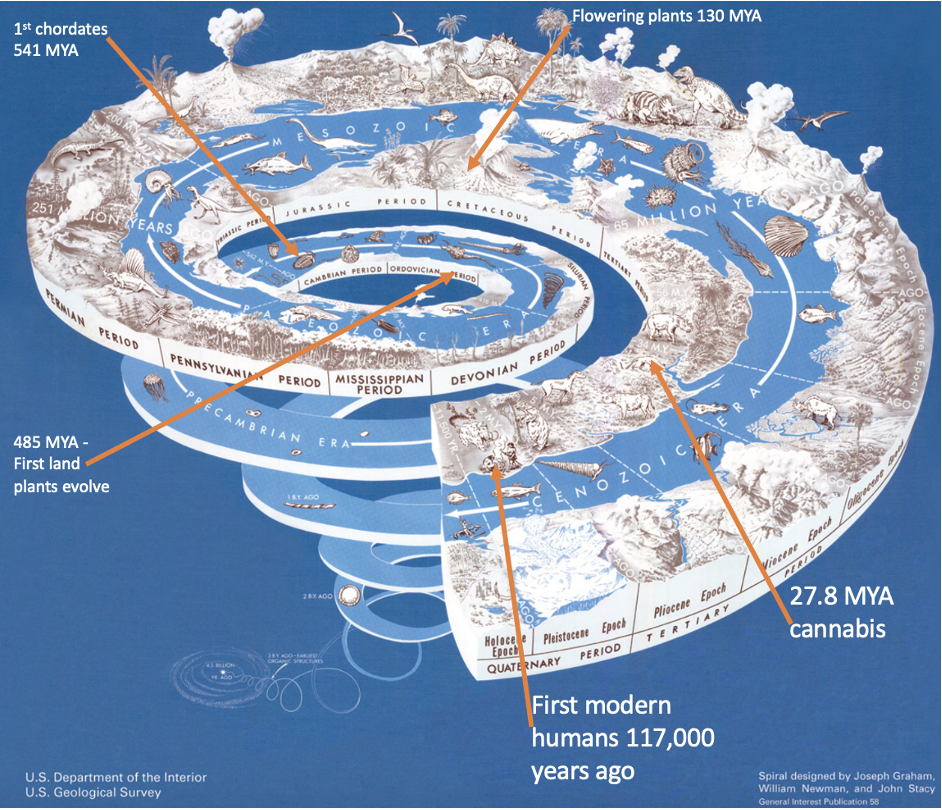
Slide 2 Image : U.S. Department of Interior’s Geologic Time Spiral with edits
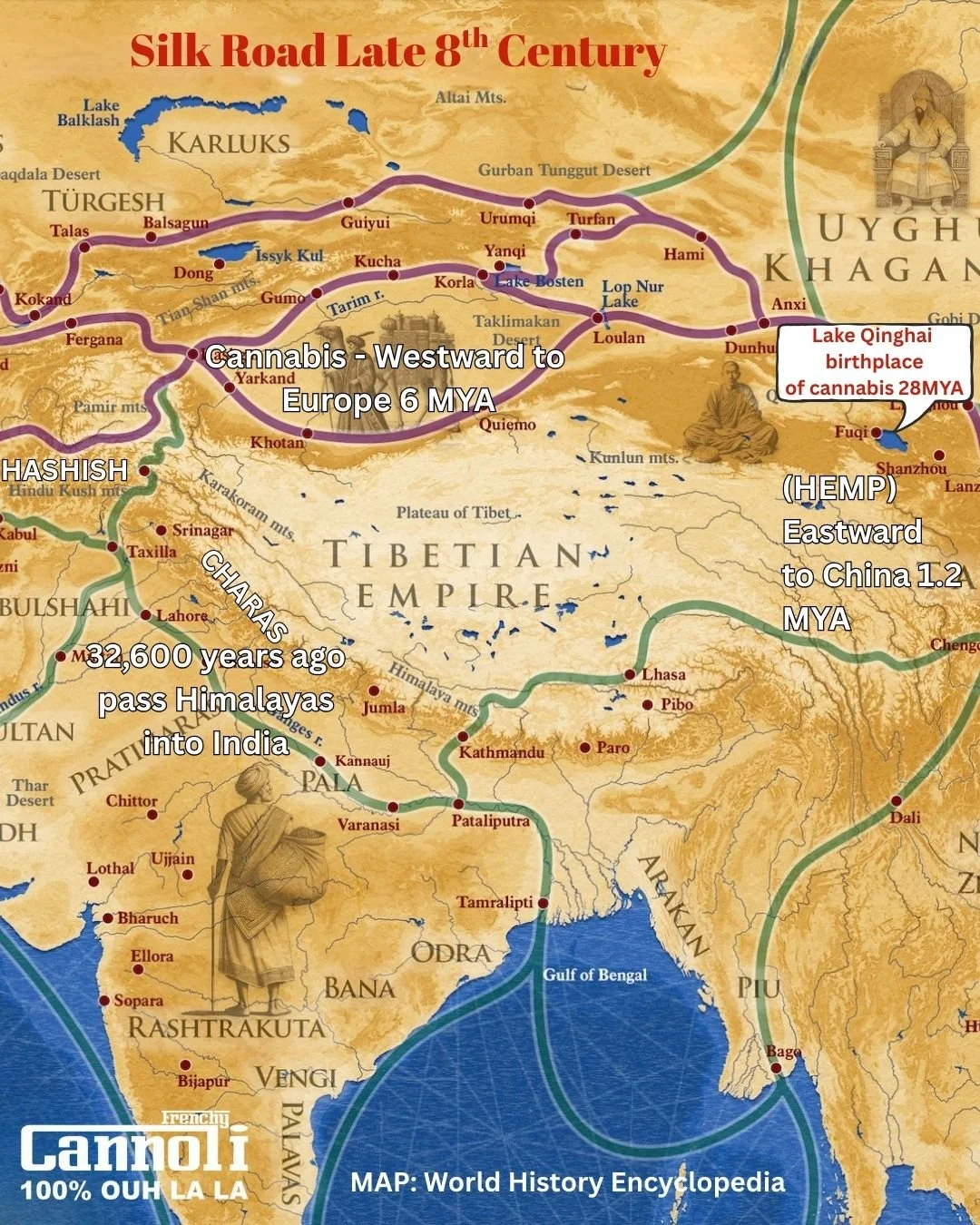
Slide 3: Our deep time cannabis story starts 27.8 million years ago when according to a study from 2019 that looked at fossilized pollen, cannabis emerged in the region of modern-day Lake Qinghai (pronunciation Ching-high), in the northeastern Tibet. For future reference note the role mountains play in cannabis quality. Please see Slide 1 reference to UV rays.
Cannabis initially moved towards the the Middle East and Europe 6 million years ago.
While hemp made its way to China 1.2 million years ago.
It took much longer for cannabis to cross over the Himalayas into Northern India and Nepal which only occurred 32,600 years ago.
Further reading: Cannabis in Asia: its center of origin and early cultivation, based on a synthesis of subfossil pollen and archaeobotanical studies, archaebotanists John McPartland, Willam Hegman and Tengwen Long, November 2019, Vegetation History and Archaeobotany 28 (1515) DOI:10.1007/s00334-019-00731-8
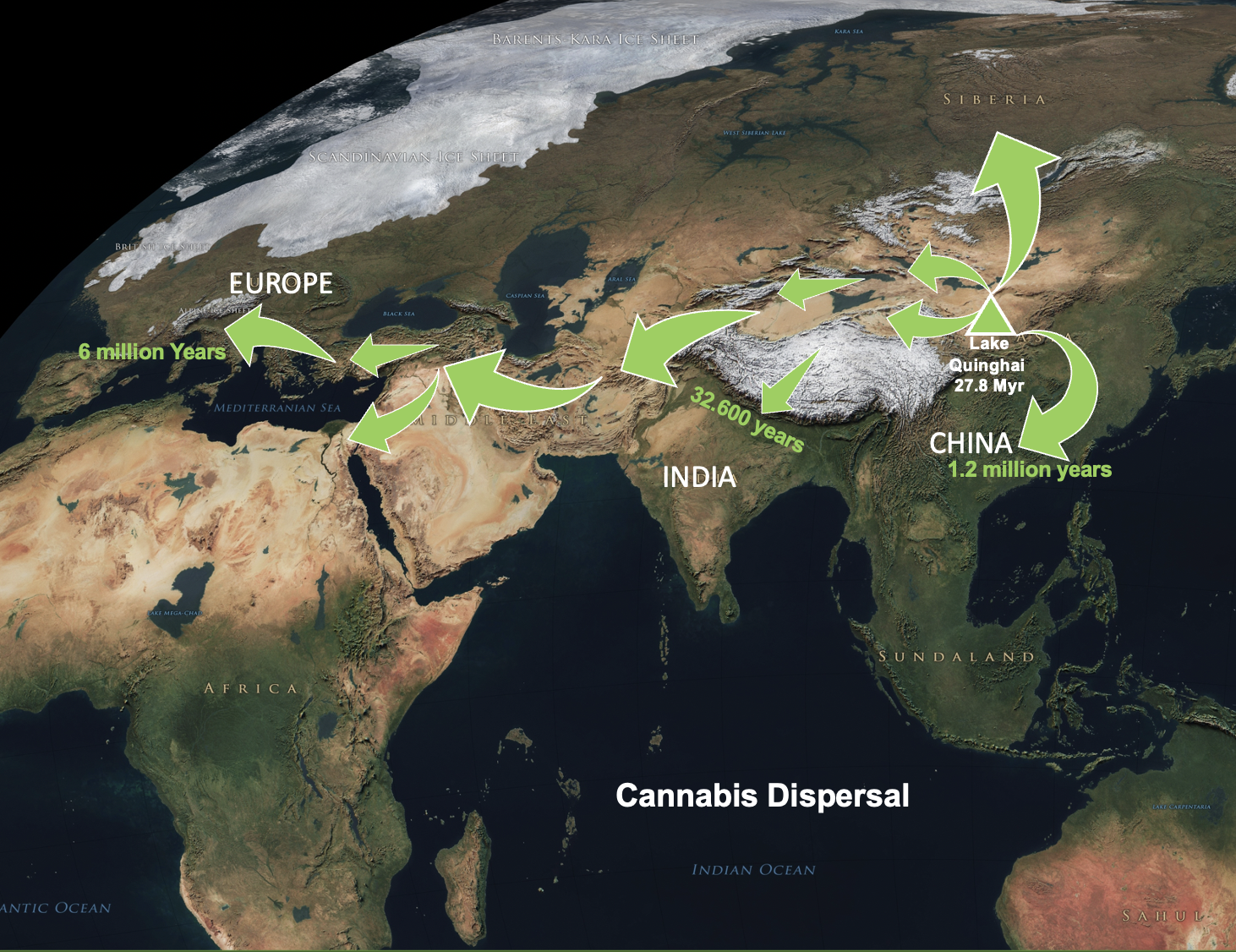
Slide Image 3: Frenchy’s edits of map showing potential cannabis dispersal from Asia to Europe
Slide 4: “From its origin in the high desert grassy plains of North-Eastern Tibet, cannabis first traveled west along the migratory path of animals, and later with human caravans to finally reach Europe 6 million years ago, before heading east towards China in the form of hemp 1.2 million years ago. The Himalayan Mountains were a formidable barrier between Tibet and the Indian Subcontinent. Pollen records show cannabis only arrived in Norther India 32.6 thousand years ago.
“Humulus Lupulus, the ancestor of the modern-day hops used in beer-making, originated in the sub-tropical region of Southern China. The natural habitat of Humulus Lupulus is filled with bushes and woodlands while the region cannabis is hypothesized to have originated from is the grassland and treeless habitat of the north-eastern high Tibetan Plateau. The natural dispersal of cannabis toward the West through mountainous regions and dry climatic conditions was much faster than the plant’s migration towards the more tropical zone of eastern China with a potentially more welcoming habitat and climate. The archaeobotanical studies done to identify the origins of cannabis “propose that the progenitor of Cannabis (Humulus Lupulus) dispersed from East Asia to the north-eastern Tibetan Plateau, where it underwent a parapatric speciation, the formation of a new and distinct species, in response to more arid conditions. Cannabis evolved from Humulus through reproductive isolation while being able to exchange genes within a contiguous hybridization zone which is considered a rare event, an event that will also define the dispersal route of the Cannabis plant toward Central Asia to a large degree.” Frenchy Cannoli, unpublished book
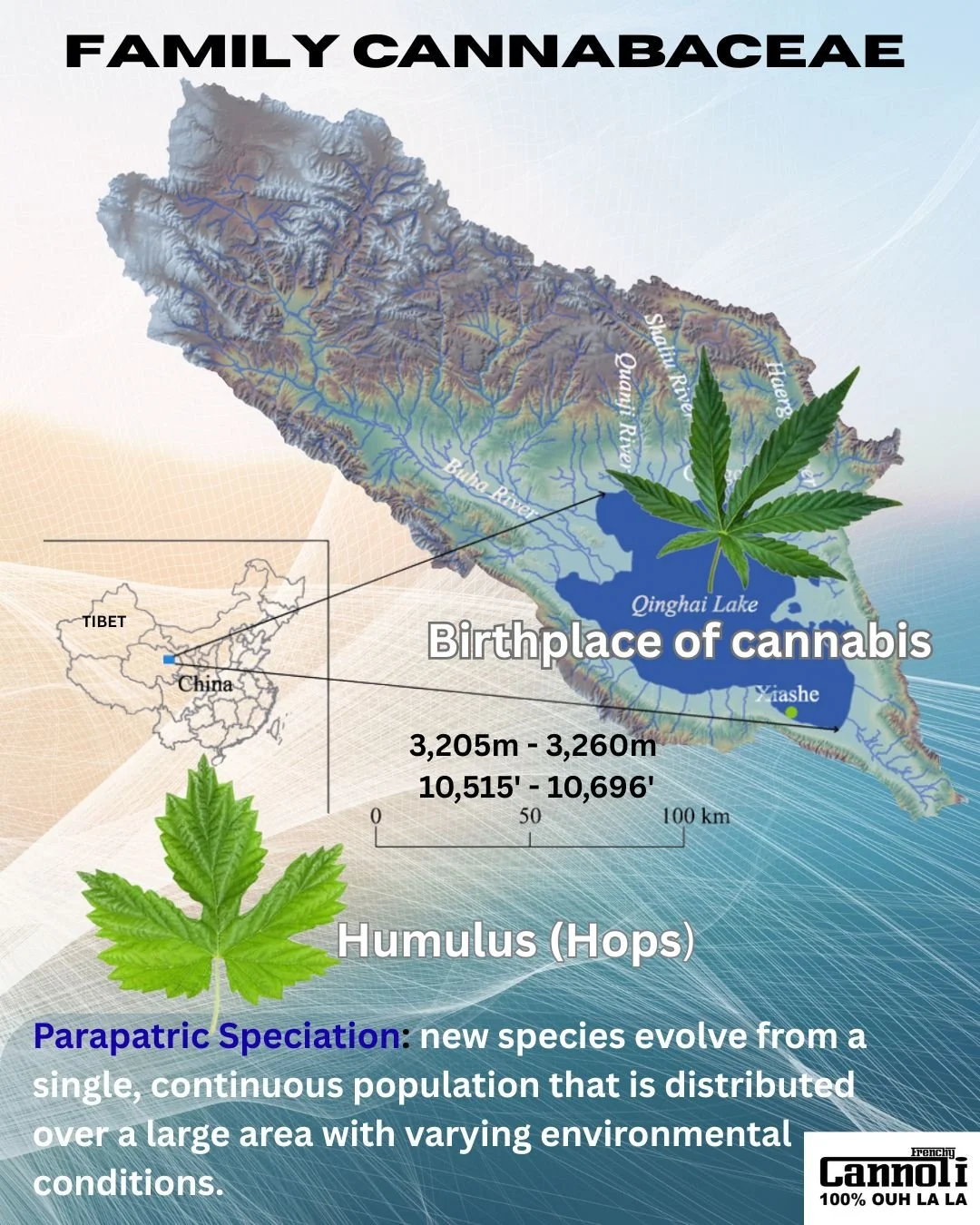
Slide 4 Image: Map of proposed origin of progenitor of Cannabis (Humulus Lupulus)
Slide 5: “During its 28 million years of dispersal and evolution on the Eurasian continent, the primal cannabis plant was shaped by climatic and ecological conditions and evolved into different subspecies or species depending on the school of thought.
The cannabis plant has such an ability to adapt to diverse regions that 28 million years of evolution later the scientific world is still debating on the classification of the plant as a monotypic genus of a single species or a polytypic genus of three subspecies adapted to extremely different climatic conditions.
One species favors humid and hot climates, the second has adapted to the grasslands and mountains of Central Asia and the shore of the Mediterranean Sea with dry and hot climatic conditions and the third has acclimated to the extreme cold conditions and short summer seasons of the Northern regions of Eurasia.”
Frenchy Cannoli, unpublished manuscript
Slide 5 Image: Map of main Silk Road routes World History Encyclopedia
Slide 6: “The basic survival of a primitive nomadic tribe is dependent on a constant source of food, medicine, and on some basic tools, adequate stone that can be chipped into an edged cutting blade, sharpened wood or bone, and most importantly fiber to shape anything from containers to simple ropes.
Weaving is the oldest human crafts along with tool-making and has been central to the survival of our species.
The most valuable sources of food for foraging tribes are seeds, grains and nuts, light and nutritious food with a long shelf life. All other perishable products foraged would be consumed daily. The ability to control fire and cook would make seeds, grains, and nuts a vital part of a nomadic tribe’s diet.
By following the ancestral migratory routes of herds of herbivores through the grasslands and steppes of Central Asia, Homo Erectus would have been able to gather an important and plentiful food source from the land as well as scavenge meat during his migration over the Eurasian continent.
In an effort to retrieve the nutrient dense seeds, resin would stick to their fingers.
Cleaning their hands would have led them to the discovery of the psychoactive property of ingested resin and the process that would lead to the first cannabis concentrate product - charas, the hand-rubbed resin from live plants.
Charas, fiber and seeds have been harvested together since the beginning of time."
Frenchy Cannoli, unpublished manual
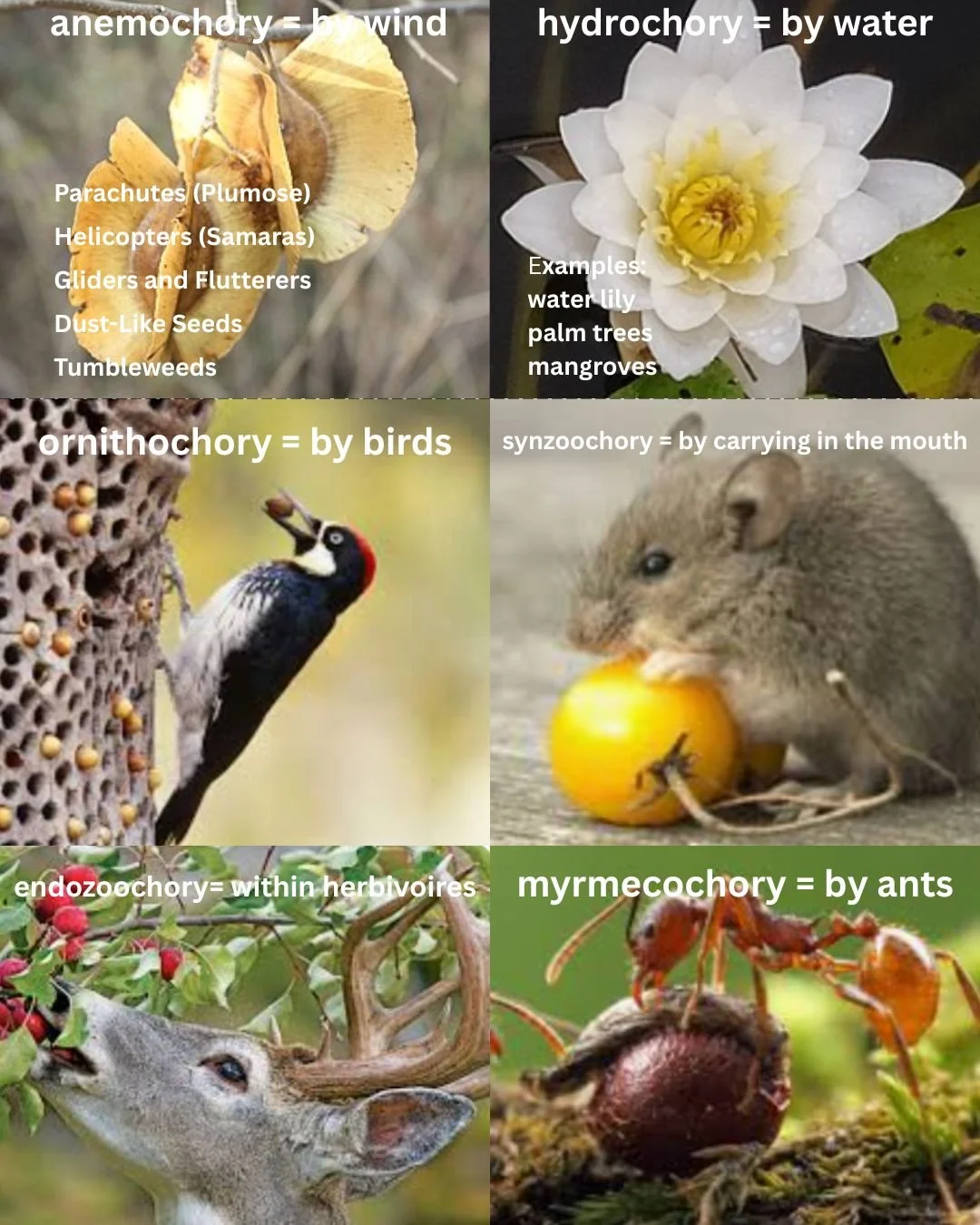
Slide 6 Image: Image shows some different forms of seed dispersal
Slide 7: “Gathering branches of the plant to take back to the relative safety of their cave dwelling for processing, our primordial great, great, grandparents would have learned relatively quickly about the psychoactive properties of cannabis as the sticky resin on the trichome heads covering the leaf’s surface would have slowly coated their fingers as they cleaned the material to gather the seeds.
In the process two consumption methodologies were experienced:
1. Edibles from the licking the resin from their fingers to clean their hands
2. Inhalation* when they discarded the leaf material in the campfire inadvertently creating their first “hot box” experience and the potential foundation for cannabis resin use as an incense in spiritual ceremonies that would occur at much later dates.”
Frenchy Cannoli, unpublished manuscript by
*Later in history Herodotus (c. 440 BCE) validated this methodology inThe Histories from his observation of nomadic Scythian tribes throwing hemp seeds onto hot rocks inside felt-covered tents to effectively create the a “hot-boxing” environment.
When it comes to the actual invention of smoking dried plants, there is a tradition in Africa of creating smoking devices from earth mounds. Since these would not survive the erosion of time, it’s impossible to say when the practice actually started. For a summary of archeological research of pipes in Africa see: African Smoking and Pipes John Edward Philips The Journal of African History / Volume 24 / Issue 03 / July 1983, pp 303 - 319 DOI: 10.1017/S0021853700022039, Published online: 22 January 2009. Also available at https://sci-hub.st/10.1017/S0021853700022039
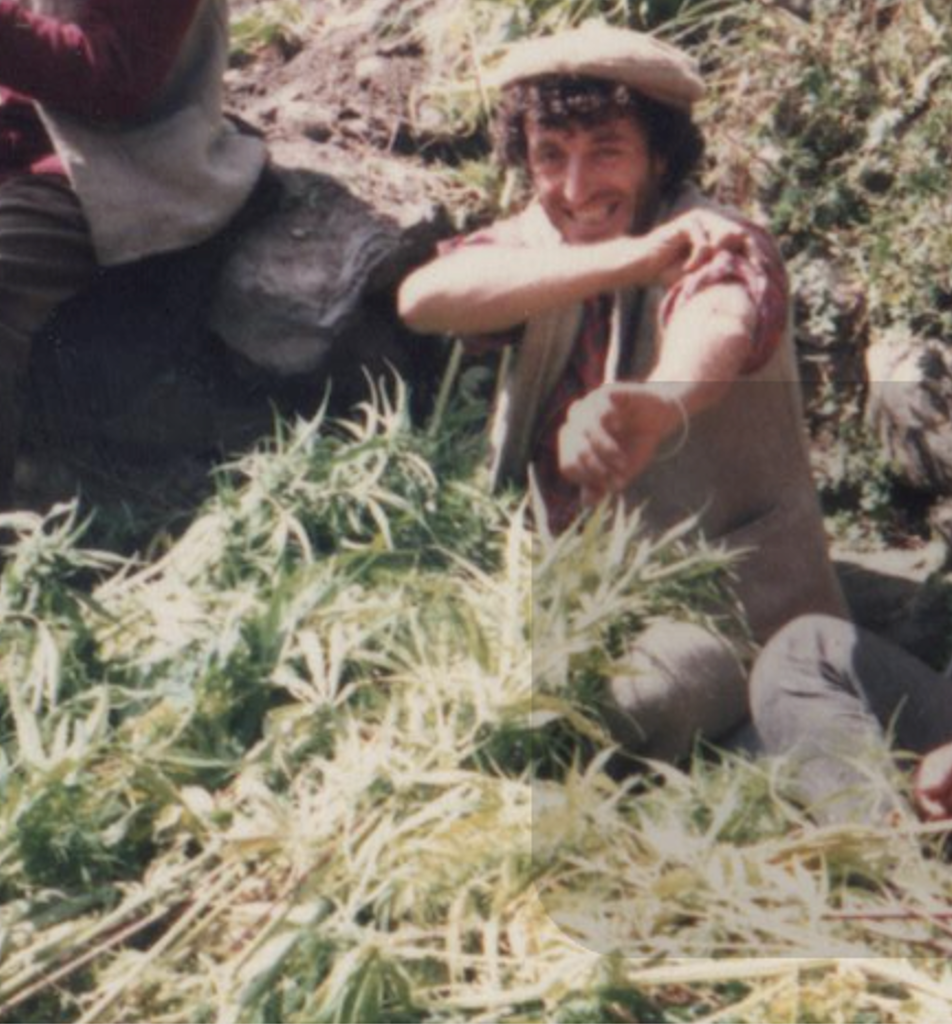
Slide 7 Image: Frenchy in the mountains of the Himachal Pradesh, India 1980-1989
Slide 8: DEFINITION: Charas - Psychoactive cannabis concentrate made from gently hand-rubbing live mature female cannabis flowers to collect the resin glands (trichome heads).
This processing methodology is a traditionally practiced in Northern India and Nepal where the humid subtropical climate makes dry sieving less practical on the very sticky plants.
“Cannabis has been mostly growing wild throughout these territories since the dawn of time; these plants are known to be superior in all their medicinal properties, as with most plants grown at high altitude, between 8,000 to 12,000 feet. Potency can be related to the natural selection of wild strains in harsh mountainous conditions, to stronger ultraviolet radiation at higher altitudes.
The principle is quite simple: take off the fan leaves, caress the flowers with gentle back-and-forth movements between your hands, clean your hands of all leaf matter and start again until a layer of resin builds up on the palms. Press and turn your thumb on the most resinous part of your other hand, snap the resin off and repeat the process until your hand is clean and your thumb holds all the resin mass, change thumb and repeat the process on the other hand. It is a very basic technique adapted to the climate conditions, wasteful in the eyes of a Westerner but Shiva's gift is bountiful in the birthplace of Cannabis.
The high of Himalayan Charas is clean, cerebral, vibrant and energizing; it is somewhat comparable to smoking a Sativa strain, with no plateau but different levels of consciousness. An amazing experience.”
Frenchy Cannoli, Charas - The First Concentrate, Weed World, Issue 115, March 2015, pg. 84-86.
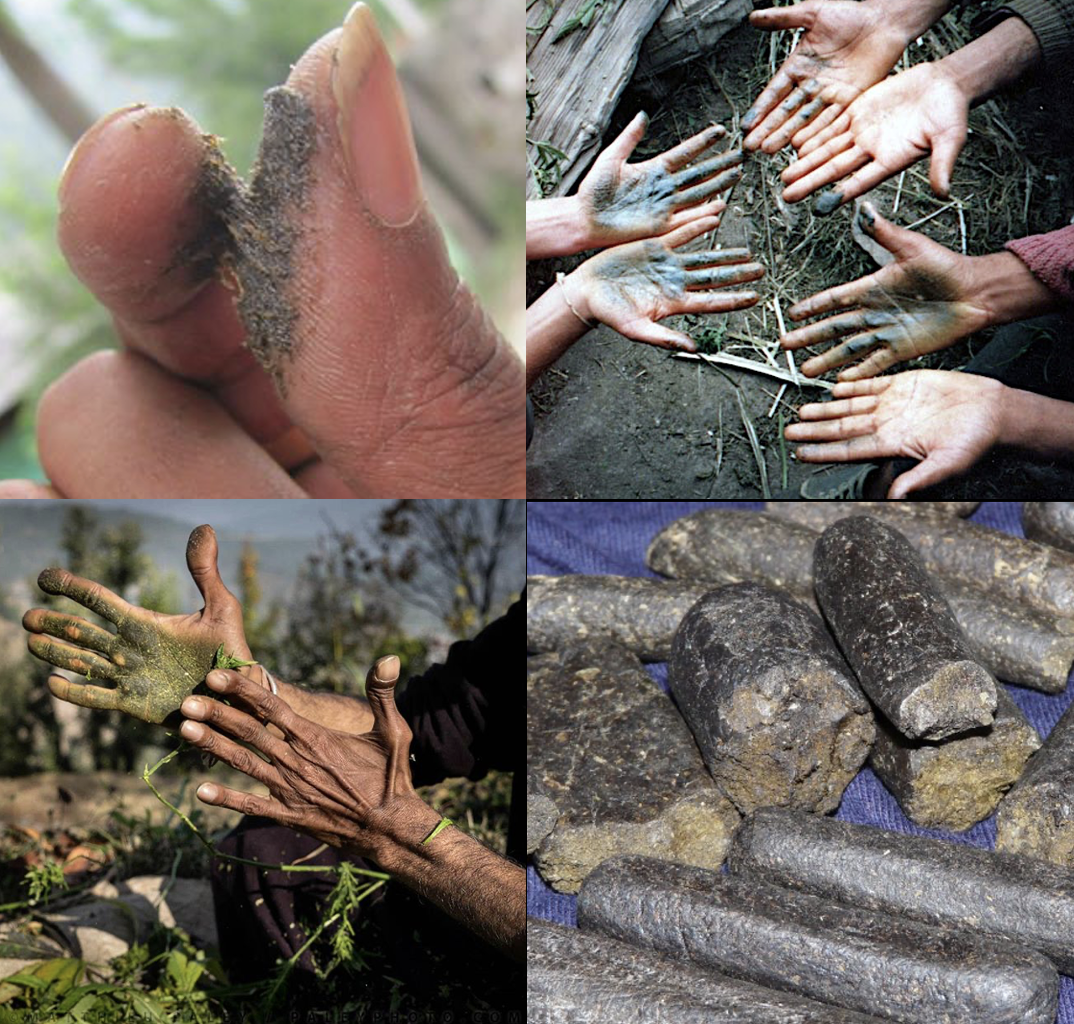
Slide 8 Image: Photos illustrating the process of the hand-rubbing live female cannabis plants to make charas, the original cannabis concentrate.
Slide 9: “The amount of knowledge necessary to create an agricultural package that would trigger sedentary life and civilization is beyond vast; the oral traditions that conveyed the knowledge through so many generations are mind boggling.
"There are 200,000 species of wild flowering plants on the planet, a majority in the plant kingdom and the source of all modern crops. There are only a few thousand of these plants that are eaten by humans, a few hundred of these have been "domesticated" but provide minor food supplements. Merely a dozen of these wild flowering plants account for 80% of modern food production and more than half the calories consumed by the world's human population today”.*
The fact that we have not domesticated a major new food plant since the beginning of sedentary life is the ultimate testimony to our ancestors' incredible ability of survival and their botanical knowledge.” Frenchy Cannoli, The Origins of Concentrate, Part 1, Weed World, Issue 113. October 2014, pg. 58-60.
*The Third Chimpanzee by Jared Diamond
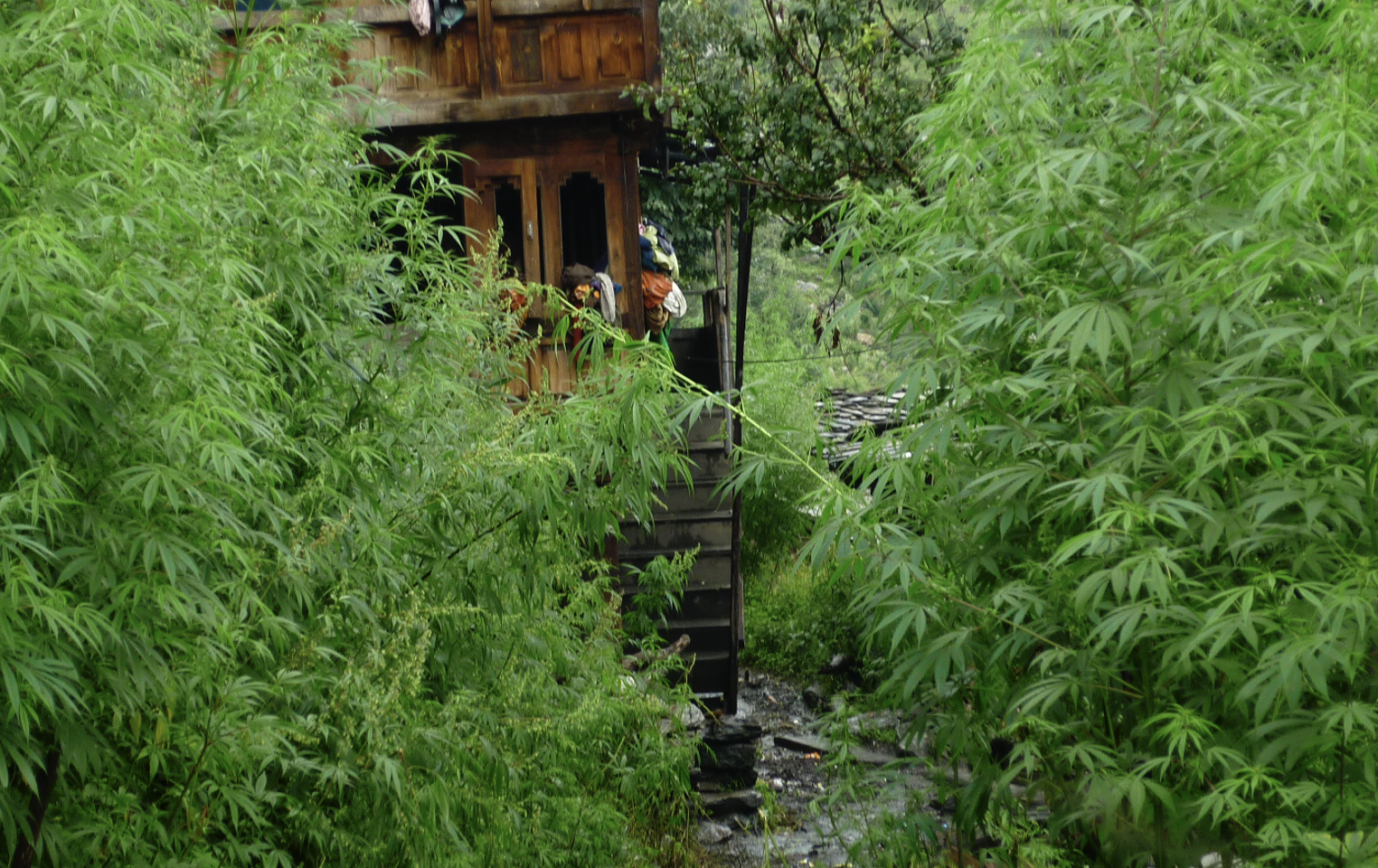
Slide Image 9: Photograph main street in a small Himalayan mountain village in Himachal Pradesh state, India. Source: Frenchy’s personal archives, circa 1980
Slide 10: "What is known today as the Hexi Corridor has been vital to the migration of plants and animals between Eastern and Central Asia as long as the Himalayas and the Tibetan Plateau have existed, but it was not studied as an ancient natural migratory route until recently.
The deserts and mountains of Central Asia - the Gobi Desert, the Altai Mountain Ranges and the Hexi Corridor - were not considered viable migration routes. Geographic and climatic conditions were believed to have been too severe and hostile. Not until the beginning of the Ice Age (Pleistocene 2.6 mya to 11,000 mya) did the warm and tropical climatic conditions of the Eocene became increasingly dryer and colder.
These regions would have been hospitable when Cannabis started its journey 28 mya** with lakes and rivers, an inviting corridor for migrating animals.
A recent article on the migration of humanity in the late Pleistocene indicates that even at the apex of the Ice age the Hexi Corridor could have been one of the major routes of migration of homo sapiens.” Frenchy Cannoli, unpublished manuscript
*Heading north: Late Pleistocene environments and human dispersals in central and eastern Asia, doi.org/10.1371/journal.pone.0216433
**When Frenchy wrote this, latest data suggested the origin of cannabis was the Lake Qinghai region of Tibet. Recent discovery of a fossilized cannabis leaf in Germany dated to 56-48 mya reopens the debate on origins and timing.

Slide 10 Image: from Heading north: Late Pleistocene environments and human dispersals in central and eastern Asia, May 29, 2019, doi.org/10.1371/journal.pone.0216433
Slide 11: “Those people they really knew their stuff!” Frenchy during workshop lecture.
“Around two and half million years ago, Homo erectus migrated out of Africa and dispersed throughout Europe and Asia. It took our distant ancestors roughly 800,000 years to move from the African continent to Asia, as confirmed by stone tools found in Malaysia that have been dated to be 1.8 million years old.
How hard and challenging a journey it must have been is just impossible to imagine. Generation after generation of discovery and adaptation, every plant, animal and event analyzed and memorized and passed down for the survival of the species.
By the time Homo erectus was discovering the Asian continent we can assume that a vast amount of knowledge was at play on their continual search for food, medicine, fiber and the means to create tools.
How long would it take a master forager to find a plant the size of a tree, that offered the three most important necessities to survival (food, medicine, fiber), with which there is a connection at the DNA level, and that is so hard to hide in the twenty-first century? A hundred years or three generations? A thousand years? A hundred thousands? Five hundred thousands? A million?
To pinpoint a date would be totally preposterous on my part but let's speculate that it took our ancestors as long to discover the cannabis plant as it took them to migrate from South Africa to Asia; that would bring it to somewhere around 900,000 to 800.000 BC and the earliest known use of fire.
The probabilities that our ancestors had the understanding of all aspects of the psychoactive properties of Cannabis resin from the beginning of their contact with the plant are simply undeniable. The possibilities that our ancestors picked the healthiest genetics are likewise very high, the simple fact that those plants had a greater chance to reproduce in a richer soil generated by human refuse and waste around campsite is logical and could actually be considered the first step in breeding and cultivating cannabis and important in its survival of the Last Ice Age.” from The Origins of Concentrate, Part 1, Weed World, Issue 113. October 2014, pg. 58-60.
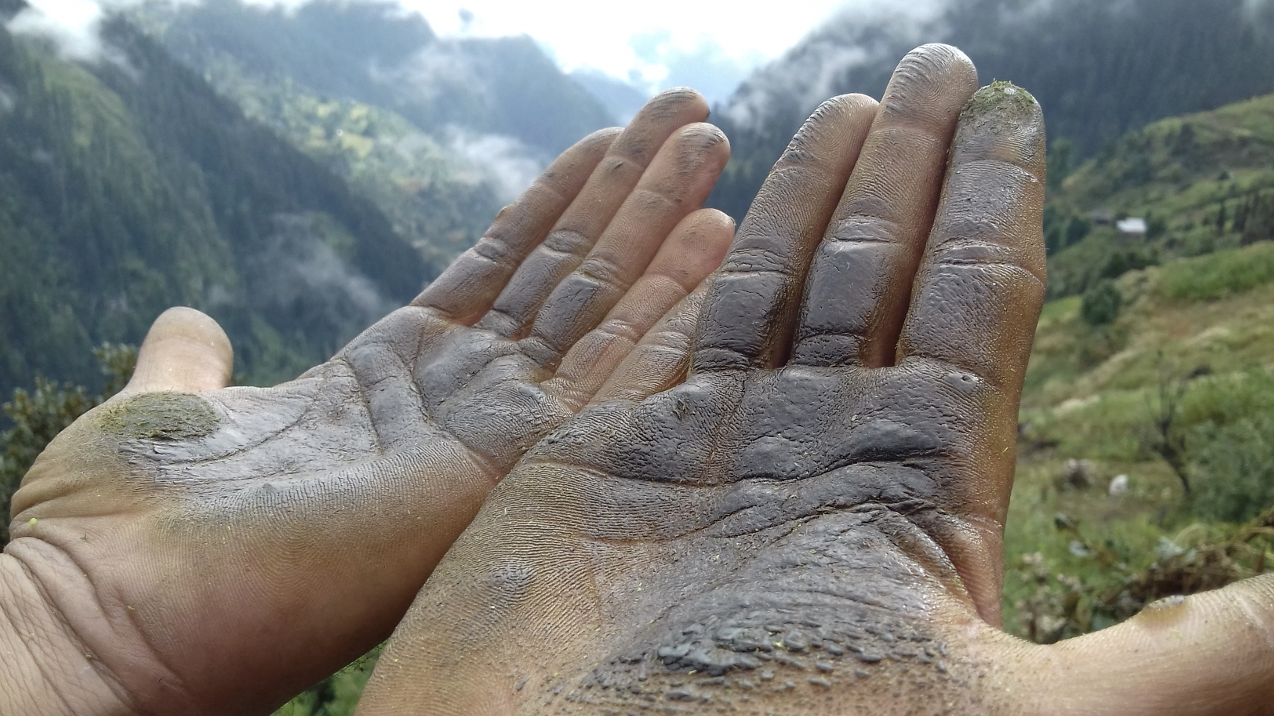
Slide 11 Image: “Hands” of charas, the first concentrate made from live female plants.
Further Reading: “The female plants have meantime been growing up to a height of some ten feet, of which the upper third is full of leaf and seed. In (Kartik) November the female plants are cut down from the root, and spread in the sun for twenty-four hours to dry. The charas is then got from the plants by rubbing the heads between the hands. This description gives the female plant a life from germination to harvest of little more than four months.”
REPORT OF THE IDIAN HEMP DRUGS COMMISSION, 1893-94. Page 67 https://archive.org/details/in.ernet.dli.2015.102443/page/n75/mode/1up
To be continued…